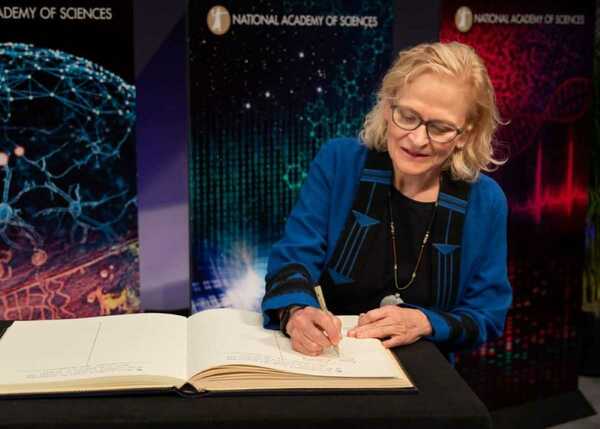
Jenny Tung inducted to the US National Academy of Sciences in May 2025!
Author: Elizabeth Archie

Jenny Tung was elected in 2024 and officially inducted into the US National Academy of Sciences in May 2025. Congratulations Jenny! Read More

Jenny Tung was elected in 2024 and officially inducted into the US National Academy of Sciences in May 2025. Congratulations Jenny! Read More
Jeanne Altmann and Susan Alberts, along with Marlene Zuk, win the BBVA Foundation Frontiers of Knowledge Award in Ecology and Conservation Biology.
https://www.frontiersofknowledgeawards-fbbva.es/noticias/frontiers-of-knowledge-award-15th-edition-to-susan-alberts-jeanne-altmann-marlene-zuk/ Read More
Susan Alberts was officially inducted into the National Academy of Sciences on 29 April 2022. She was elected in 2019, with the induction scheduled for April 2020, but it was postponed because of the pandemic.
Click here to see how this work is made possible
Princeton, Duke, Notre Dame, and Max Planck Institute of Evolutionary Anthropology

Kenya Wildlife Service, University of Nairobi, Institute of Primate Research, The George Washington University, National Museums of Kenya, Enduimet Wildlife Management Area


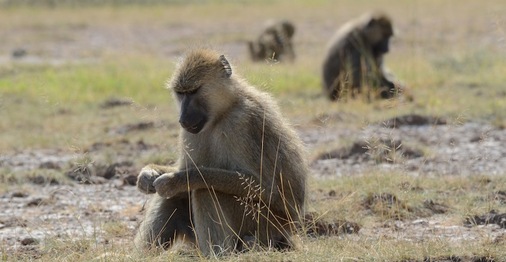
Located near Amboseli National Park in Kenya, ABRP is one of the longest-running studies of wild primates in the world. ABRP is directed by Dr. Jeanne Altmann at Princeton University and Dr. Susan Alberts at Duke University. The Associate Directors are Dr. Beth Archie at the University of Notre Dame and Dr. Jenny Tung at Max Planck Institute of Evolutionary Anthropology . Click the links at left to learn more about the project and our research.